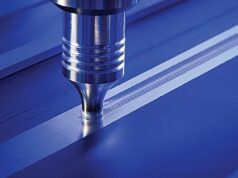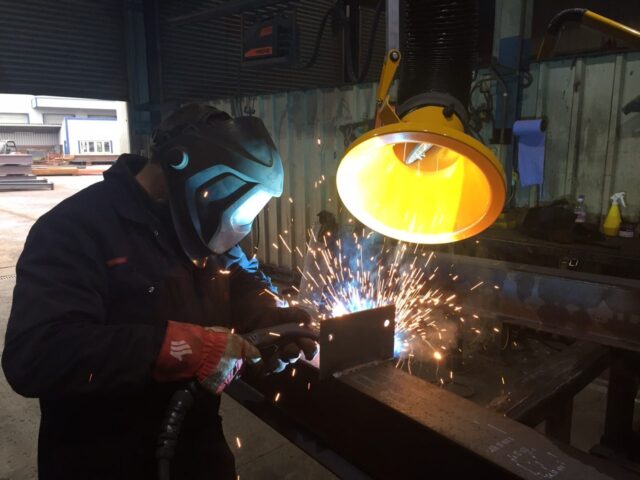
The days of having more welders on the production floor are gone, and high-volume welding has evolved so much more than that. Many improvements in quality, alongside smarter plans, efficiency, automation, and quality control, have helped manufacturers make more parts in less time.
The whole production welding process relies on a smooth and stable flow of operations. This is why many manufacturers opt to use Production Welding Services when they want capacity they know they can rely on but don’t want to build all the skills in-house. Changes in the overall process can often pay maximum dividends. Here is what makes high-volume welding more efficient today:
1. Automation
One of the greatest changes in the field of manufacturing with high volumes is robotic welding. A robot can return to an individual weld path, holding the same movement, speed, and positioning characteristics, and can be utilized when parts are identical in design and joint pattern. Such uniformity can drive streamlined production lines and help minimize variability between batches.
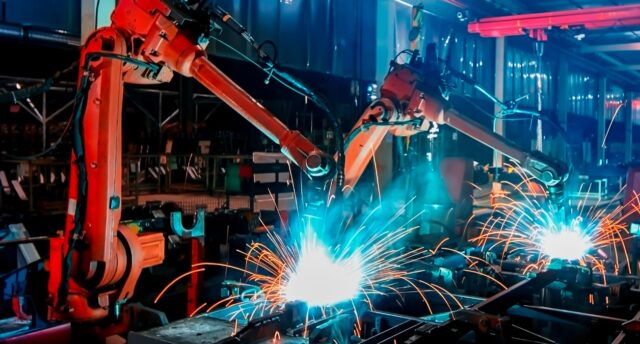
Today, a modern robotic system can also replicate movements that are not pre-programmed. Equipment responsiveness to changes in joint location or part position can be provided by cameras, sensors, seam tracking systems, and better software. The advancements are making automated welding more flexible for true production conditions.
2. Digital Controls
Modern welding equipment provides the operator with increased control of important welding machine settings. Current, voltage, wire feed speed, and other welding parameters can be controlled with more repeatability using digital controls. After setting the correct parameters, teams can repeat the process more consistently rather than relying on intensive fool-proofing and adjustments.
Data for production can also be beneficial for connected systems. Data regarding the condition of equipment, production cycle, and process conditions enables manufacturers to recognize equipment downtime trends and analyze quality issues. This makes it more easily possible to enhance production through real-world results, rather than a guess.
3. Precision
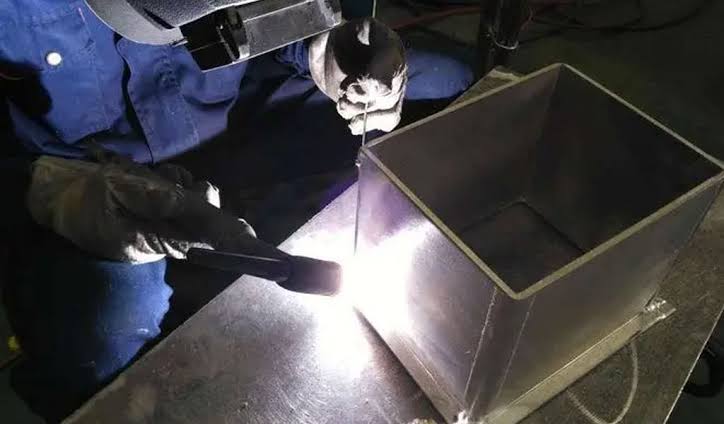
Precision welding is a process-sensitive method. With different material types and applications, the right welding technique must be used to achieve good results, say experts at Micro Weld, Inc. Precise TIG and laser welding is their record, which shows the importance of correct heat input and accurate placement of welds when parts have tight tolerances. This degree of process discipline can assist in maintaining consistency as output rises in production environments.
4. Faster Changeovers
Producing a lot doesn’t necessarily entail making just one part during the entire day. Many manufacturers change from one related product to another, or switch sizes and/or different customer specifications. This can significantly impact output by reducing the time taken for changeovers. Each minute saved in setup equates to a minute more a welding cell can run the work.
Making these longer transitions easier is possible with a standardized method for instructions and modular tooling. Modular programs, materials planned in advance, and easy access to fixtures also cut down on unnecessary searching and programs set up delays. This translates to a better flow of the production process and fewer interruptions between batches.
5. Preventive Maintenance

High-volume welding schedules can be rapidly impacted by equipment downtime. Preventive maintenance can detect feeding issues, consumables wearing out, damaged cables, fixtures, and other problems early on and before they cause bigger problems. Planned maintenance can also be scheduled in conjunction with production requirements and not deemed to be necessary based on the occurrence of a breakdown.
This will secure productivity and consistency. When it comes to scheduling a maintenance period, especially one short and affordable, it’s much better to have anticipated it than have it just drop out of the sky during an important production run. Properly cleaning, servicing, and adjusting a welding cell will also improve the reliability of your equipment.
6. Material Efficiency
Efficiency can be defined not just as the number of parts a shop can produce. Unnecessary heat, rework, poor fit-up, spatter, and unnecessary grinding can add to the cost of each finished component with excess wire usage. The losses can be minimized with improved process control and still achieve the weld quality necessary for the application.
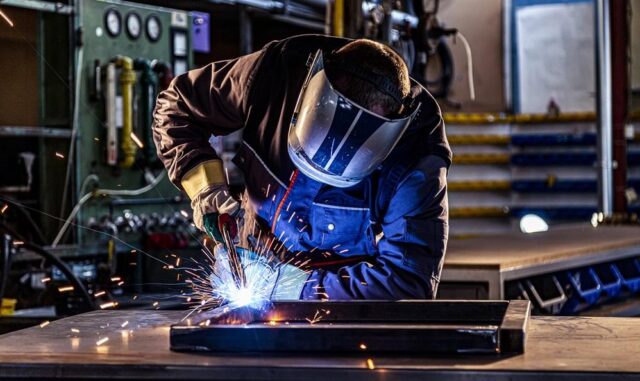
In some cases, new welding technologies can lead to increased shop efficiency. However, for every production line there is no universal solution. The materials, thickness, joint design, production quantity, quality requirements, and equipment expenses are all important factors to consider in changing a process. Best results are obtained by choosing technology to address a production need.
The bottom line is that there are many things that can be done at the same time in the welding process to make it more efficient today. Today, with high-volume welding, there are several ways to improve the process at the same time. Combined with robotics and digital controls, there is a multitude of ways that wasted time and repeatability both can be minimized. The most successful live-handling operations are not defined by an individual technology. Rather, they’re defined by a well-balanced workflow that involves people, equipment, and quality processes that complement one another.