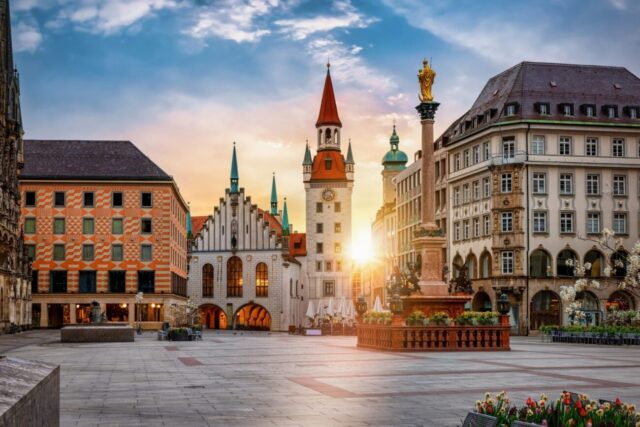
Ask someone to picture a European city famous for its escort scene and they will probably say Amsterdam, or Hamburg’s Reeperbahn, or the sprawling Eros centers of Frankfurt’s Bahnhofsviertel. Almost nobody says Munich.
is no red-light window district, no tourist map pointing you toward it, no neon strip you stumble into by accident on the way from the train station.
Bavaria banned street prostitution outright and pushed the trade into a handful of licensed addresses on the industrial fringe.
And yet, in the part of the adult industry that deals in five-figure weekends rather than twenty-euro transactions, Munich’s name comes up constantly.
That is the puzzle this piece is trying to take apart: not whether Munich has a sex industry (every major German city does, legally), but why the specific reputation attached to it is “expensive and discreet” rather than “big and visible.”
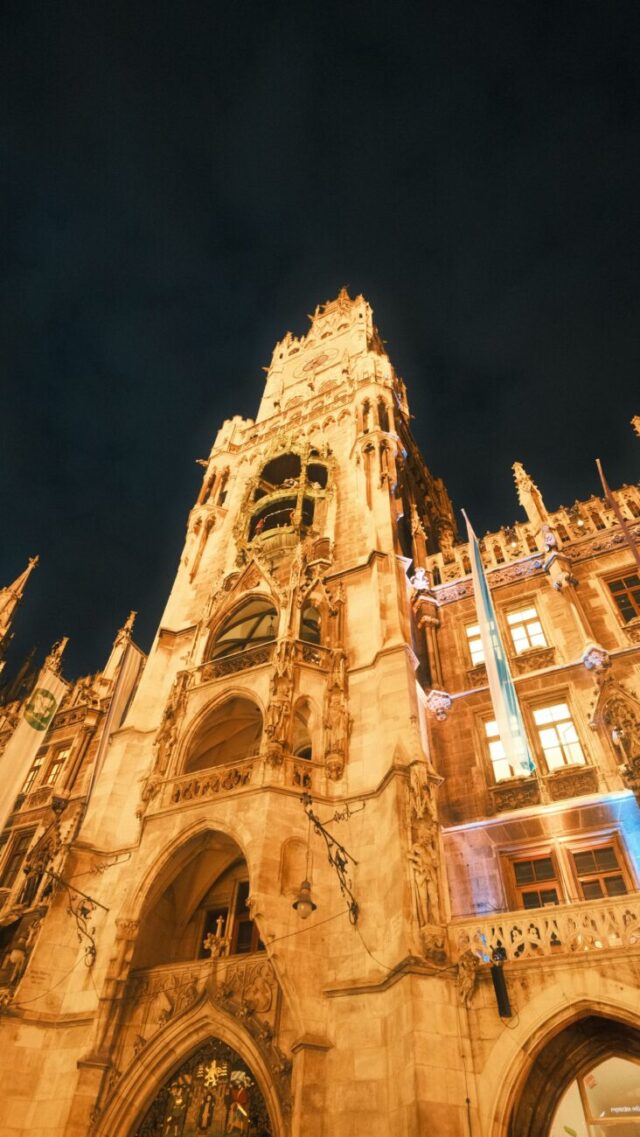
Munich has no red-light district. That’s kind of the point.
Frankfurt’s Bahnhofsviertel is a genuine neighbourhood: Eros centers, sex shops, cheap running-houses, and an open drug scene sitting a few blocks from the European Central Bank.
Munich’s equivalent, the short stretch of Schillerstrasse and Holzstrasse south of the Hauptbahnhof, is a fraction of the size. A 2019 Süddeutsche Zeitung reporter who spent a night there described a 700-metre street that “wants to be cosmopolitan and sometimes looks like a suburban alley,” with a handful of red-lit venues rather than a district. Regulated travel guides describe the whole zone as walkable in under ten minutes.
That is not an accident of geography. Bavaria’s Catholic-conservative political culture has, for decades, kept the visible, street-level version of the trade as small and unobtrusive as legally possible.
Street solicitation is banned across the city entirely, not just restricted to a zone, which is stricter than Frankfurt, Hamburg, or Berlin.
What that leaves behind isn’t less activity, just less visibility, and a market pushed toward the parts of the industry that don’t need a shopfront: private apartments, hotel calls, and agencies working entirely online.
Where the money actually is
Here is the part that doesn’t show up in any red-light guide: Munich is, by a wide margin, Germany’s wealthiest major city. Purchasing power in Munich reached roughly €38,364 per resident in 2025, about 35 percent above the national average, and the city is home to around 69,800 millionaires, a share of roughly 4.3 percent of the population.
According to income-millionaire density data compiled by DataPulse Research, Munich has about 164 income millionaires per 100,000 residents, third among German cities behind only Düsseldorf and slightly ahead of Frankfurt and Hamburg.
None of that is unique to Munich in isolation – Frankfurt has more raw financial-sector wealth, and Wolfsburg has a stranger GDP-per-capita number thanks to Volkswagen.
What is unusual is the combination: dense private wealth, headquartered corporations (BMW and Siemens both run global operations from the city), and a business-travel calendar that keeps refilling the city with people spending on someone else’s expense account.

The trade-fair economy nobody puts in the tourism brochure
This is the piece that I think gets underweighted in every “why is this city like this” explainer: Munich runs one of the biggest trade fair operations on the planet, and it has almost nothing to do with beer tents.
A 2026 economic-impact study by Prognos, commissioned by Messe München, found that events at the Munich exhibition centre generate an average of €4.45 billion in nationwide purchasing power per trade-fair year and support around 34,400 jobs across Germany.
In the “mega” fair year of 2025, the venue drew 34,600 exhibitors and more than 2.5 million visitors, a number that comfortably exceeds Munich’s own resident population.
As Messe München’s co-CEOs put it in their joint statement on the 2026 study: “these figures clearly show that trade fairs and conferences in Munich are far more than platforms for innovation and exchange. They are a powerful economic engine for Munich, Bavaria, and Germany as a whole.”
Trade-fair visitors don’t behave like ordinary tourists. The average exhibition visitor stays 1.8 days and extends the trip into the city and surrounding region, and events like bauma, IAA Mobility, BAU, and EXPO REAL fly in tens of thousands of international executives at a time, most of them on corporate budgets.
Layer Oktoberfest on top of that – 6.7 million visitors in 2024, hotel occupancy peaking at 92 percent and room rates spiking to roughly €415 a night during the festival’s busiest week – and you get a city whose entire hospitality economy is built around short, high-spend visits from people with money to burn and limited time to spend it.
Munich’s hotel market posted a RevPAR premium of 23.5 percent over the German average in 2024, and the city has recently added its first Rosewood and its first Marriott Luxury Collection property; the 73-room Mandarin Oriental Munich changed hands in 2025 for roughly €150 million, about €2 million per room.
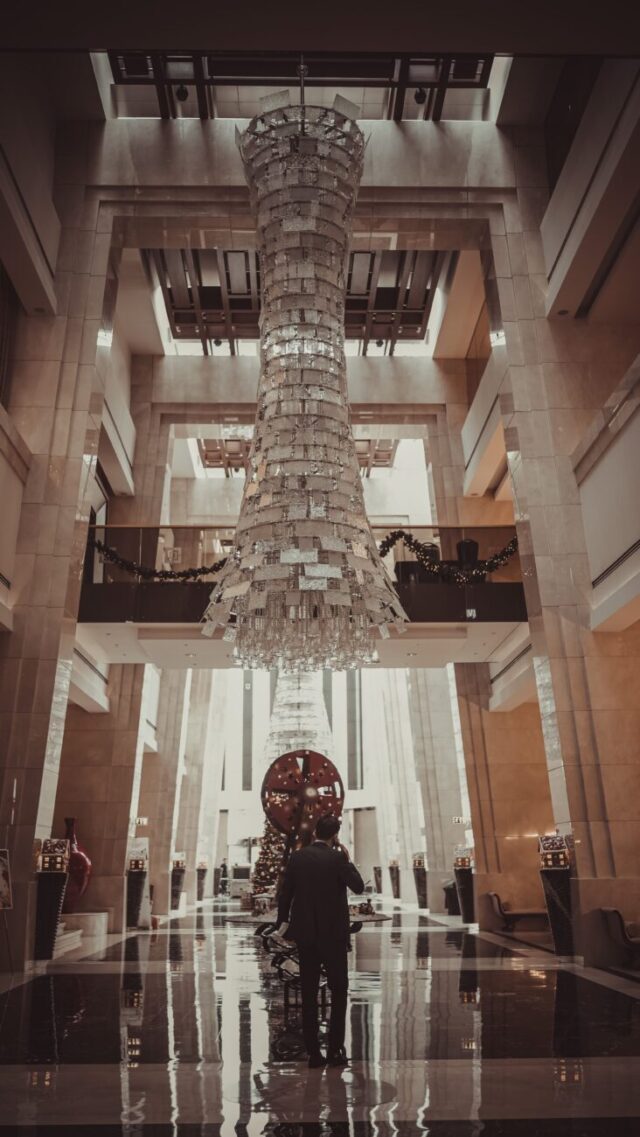
That’s the actual demand side of a “high-class escort capital”: not a bigger industry, but a denser concentration of people who can afford one and are only in town for a night or two.
Bavaria wrote a law that filters for expensive
Germany’s regulatory framework is the same everywhere on paper. Prostitution has been a legal profession since the 2002 Prostitution Act, and the 2017 Prostitute Protection Act (Prostituiertenschutzgesetz, or ProstSchG) added compulsory registration, health counselling, and licensing for anyone running a “prostitution business” – a category that explicitly includes escort agencies. Where it stops being uniform is enforcement.
In Berlin, Hamburg, and North Rhine-Westphalia, an agency generally only needs to notify the local authority that it exists.
In Bavaria and Baden-Württemberg, it needs an actual operating licence under §12 ProstSchG before it can open at all, complete with a submitted business concept, a police clearance certificate for management, and proof of financial reliability. Getting it wrong is not a slap on the wrist: unlicensed operation can draw fines up to €50,000, and a revoked licence can end the business outright, as detailed in a legal breakdown of German escort agency regulation published in late 2025.
My read is that this is the real mechanism behind Munich’s reputation. A higher regulatory bar doesn’t shrink demand, it raises the minimum viable price of doing business legally.
Agencies that can’t absorb the compliance cost either don’t open in Bavaria or operate quietly and expensively rather than at volume. One licensed local operator, München escort agency Louisa, is a fairly typical example of the model this produces: a small, curated roster marketed on style and discretion rather than price, which is exactly the kind of business the licensing structure tends to select for.
So does the data actually back “capital”?
Here’s where I want to push back on my own headline, because the honest answer is: not in raw numbers.
Germany’s federal statistics office, Destatis, reported roughly 32,254 validly registered sex workers nationwide at the end of 2024. Bavaria accounted for 4,761 of those – solidly second among German states, but less than 60 percent of North Rhine-Westphalia’s 8,390, and a steep drop from Bavaria’s own pre-pandemic figure of 8,149 in 2019.
| State (flagship city) | Registered sex workers, 31 Dec 2024 | Income millionaires per 100,000 residents | Agency licensing rule |
|---|---|---|---|
| Bavaria (Munich) | 4,761 | 164 | Full §12 ProstSchG licence required before opening |
| North Rhine-Westphalia (Cologne/Düsseldorf) | 8,390 | 171 (Düsseldorf) | Notification to local authority is sufficient |
| Hamburg | 1,102 | 124 | Notification to local authority is sufficient |
| Berlin | 1,705 | 58 | Notification to local authority is sufficient |
Sources: Destatis, ProstSchG statistical report, published 3 July 2025 (registration figures, state level); DataPulse Research millionaire-density analysis, April 2025 (city-level wealth figures); BB-Escort legal overview, December 2025 (licensing rules). Figures reflect the most recent full-year data available as of August 2026.
Notice what the table doesn’t show: any correlation between how rich a city is and how many registered sex workers it has.
Bavaria requires the toughest paperwork of the group and still has under half of NRW’s headcount, while Munich’s millionaire density is nearly identical to Düsseldorf’s. That’s a genuine problem for any claim that Munich is a “capital” in a volume sense, and I think it’s worth saying plainly: it isn’t one.
Guides that cover German nightlife in detail, including The Discreet Gentleman’s 2026 Germany overview, describe Munich’s scene outright as “smaller” and “less visible” than Berlin’s or Hamburg’s.
So which would you trust more as a definition of “capital”: a market with thousands of registered workers and rock-bottom prices, the kind Frankfurt’s Bahnhofsviertel is built on, or a market roughly a tenth that size, operating under a licence that can cost tens of thousands of euros to obtain and can be pulled for a single serious violation?
I know which one produces a reputation for exclusivity. I’m less convinced it produces a bigger industry.

What “high-class” actually means here
Put together, Munich’s case rests on four things that have nothing to do with the size of its adult industry: concentrated private wealth, a trade-fair calendar that injects tens of thousands of high-spending international visitors for short, intense stays, a legal framework that makes cheap mass-market operation harder than in Berlin or Hamburg, and a cultural preference for keeping the whole subject invisible rather than zoned and branded the way Hamburg markets the Reeperbahn.
I’d argue the smarter comparison isn’t “Munich’s scene vs. Berlin’s scene” as a whole – it’s Munich’s luxury segment against everyone else’s luxury segment, and there Munich has real structural advantages that a bigger, cheaper red-light district in another city simply can’t replicate.
The catch nobody markets
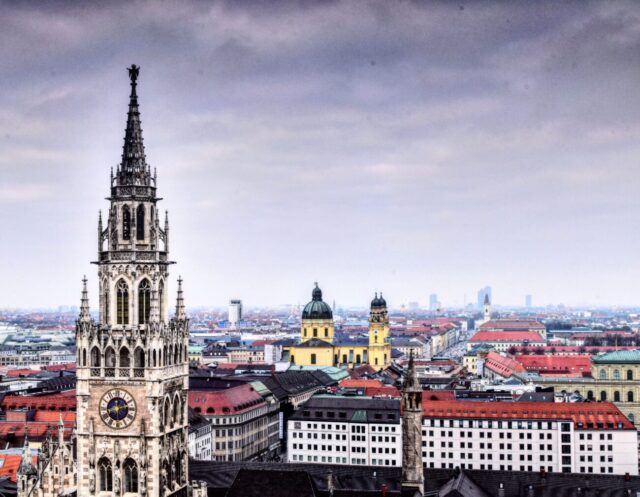
None of this changes the underlying legal and safety realities, which apply in Munich exactly as they do anywhere else in Germany.
Sex work is a legitimate, taxed profession, but it is regulated in real detail: workers must register with a health authority and attend counselling before starting, self-employed workers owe income tax and, above a turnover threshold, 19 percent VAT, and clients dealing with unlicensed or unregistered operators are stepping outside a framework built specifically to protect the people working in it.
The discretion that gives Munich its high-end reputation cuts both ways – a smaller, quieter market is also harder for an outsider to verify, which is exactly why the licensing paperwork exists in the first place.
How this article was put together. The regulatory detail comes from Germany’s Prostitute Protection Act text, Bavaria’s state licensing portal, and a December 2025 legal explainer on agency rules.
Registration figures are Destatis’s official 2024 statistical report, published July 2025. Wealth and tourism figures come from Munich’s city economic office, Messe München’s 2026 Prognos-commissioned impact study, HVS’s 2026 hotel valuation index, and a 2025 millionaire-density analysis by DataPulse Research.
I could not find any official city-level breakdown of registered sex workers for Munich specifically – Destatis only publishes at the state level – so any claim about Munich being a “capital” is necessarily built from indirect economic signals rather than a direct industry count, a limitation worth keeping in mind.
Figures on trade fairs, hotel rates, and wealth are current as of mid-2026 and should be rechecked annually.