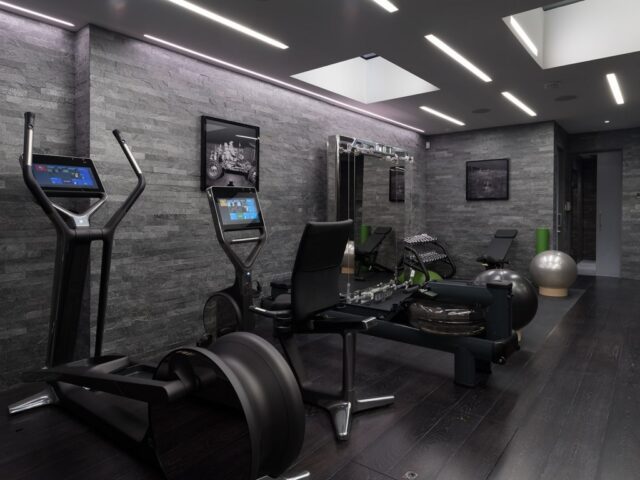
A surprising number of homeowners underestimate how quickly a basement can turn into the perfect training environment.
According to industry surveys from home fitness equipment manufacturers, basements are among the most common locations for permanent home gyms because they offer privacy, stable temperatures, and usable square footage.
Still, a basement workout area works best when the setup addresses layout, lighting, and moisture from the start.
A well planned basement home gym layout can feel organized instead of cramped, even in a modest space. The goal is to create a room that stays dry, comfortable, and easy to use every day. Thoughtful lighting and smart display mounting also make workouts smoother and more motivating.
Planning a Practical Basement Home Gym Layout
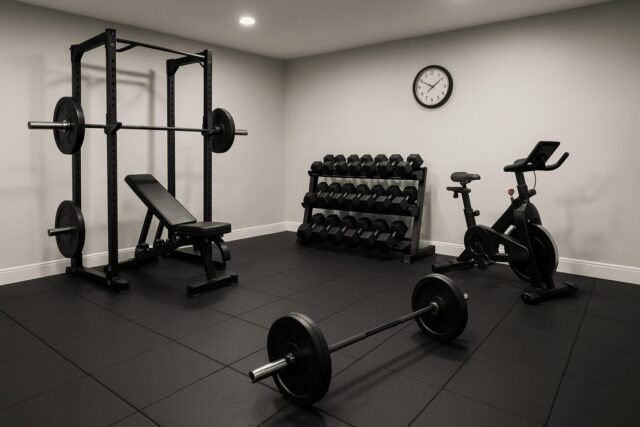
A functional basement home gym layout starts with understanding how movement happens during workouts. Tight spacing often leads to unused equipment or awkward training sessions. Begin by measuring the room and mapping out exercise zones before moving any equipment downstairs.
Most effective layouts divide the space into simple activity areas. The following zones help maintain order and improve safety:
- Strength training areas should include enough clearance around racks or benches so you can move freely and safely.
- Cardio zones work best near outlets and ventilation so treadmills and bikes stay cool during longer sessions.
- Open floor areas make stretching and bodyweight exercises comfortable without rearranging equipment.
- Storage corners keep accessories such as resistance bands and mats organized instead of scattered across the floor.
Leave at least one clear walkway across the room. That simple step prevents the basement home gym layout from feeling cluttered and makes the space easier to maintain over time.
Mounting Screens For Guided Workouts
Many people now follow structured training programs or video classes while exercising. A mounted screen keeps instructions visible without taking up valuable floor space or requiring awkward viewing angles.
One practical solution is installing a Workout Display that sits at eye level during standing exercises and remains visible from a bench or mat. Mounting a screen on a wall keeps cords out of the way and prevents accidental bumps during workouts.
When choosing a mounting location, consider these practical points:
- Eye level placement reduces neck strain during longer sessions.
- Distance from mirrors prevents distracting reflections.
- Solid wall anchors ensure the mount stays secure even in older basements.
A properly positioned display often becomes the central feature of a training area and helps maintain consistency with guided programs.
Controlling Moisture In Basement Gyms

Moisture is the biggest threat to any basement home gym layout. Even basements that appear dry can develop humidity problems that damage equipment and flooring over time.
Start by checking for visible warning signs:
- Condensation on walls or pipes often signals poor airflow.
- Musty odors suggest hidden dampness behind surfaces.
- Peeling paint indicates moisture moving through concrete.
Dehumidifiers provide the most reliable long term solution. Most basement gyms perform best when humidity stays between 40 percent and 55 percent. That range protects metal equipment and keeps rubber flooring from breaking down prematurely.
Recommended indoor humidity for fitness spaces typically falls between 40 percent and 60 percent according to indoor air quality guidelines from building science organizations.
Sealing small cracks in foundation walls also reduces moisture entry and helps stabilize the basement environment.
Flooring And Equipment Placement Considerations
Flooring often determines how comfortable and quiet a basement gym becomes. Concrete floors transmit vibration easily, which can make workouts feel harsh and disturb other parts of the house.
Rubber flooring remains one of the most practical solutions because it protects both equipment and joints. Thickness matters depending on the equipment used.
[su_table responsive=”yes”]
|
Flooring Type |
Typical Thickness |
Best Use |
| Foam mats | 10 to 20 mm | Light workouts and stretching |
| Rubber rolls | 6 to 8 mm | Cardio and mixed training |
| Rubber tiles | 12 mm or more | Weight training areas |
[/su_table]
Heavier equipment should sit directly over thicker flooring sections. Position racks and machines along walls to keep the center of the basement home gym layout open for movement.
Good flooring reduces noise and protects concrete surfaces from long term wear.
Keeping The Gym Organized Long Term
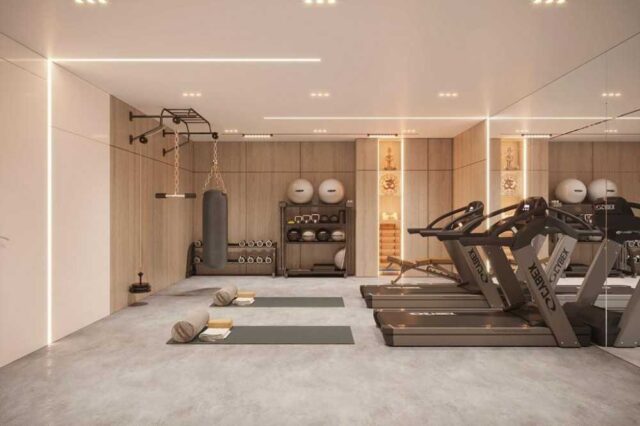
Even a carefully designed basement home gym layout loses efficiency when accessories accumulate without structure. Long term organization depends on simple storage systems that are easy to maintain.
Wall mounted storage usually works better than floor containers. Vertical storage keeps the space open and prevents tripping hazards.
Effective storage ideas include:
- Wall hooks keep resistance bands and jump ropes easy to reach.
- Narrow shelves hold cleaning supplies and small accessories.
- Vertical plate storage reduces clutter around racks.
- Labeled bins make seasonal gear easier to rotate.
Small improvements add up quickly. A clean training area encourages consistent workouts and makes equipment last longer.
Good organization also reduces setup time so sessions start without delay.
A basement gym can become one of the most useful spaces in a home when layout, moisture control, lighting, and mounting choices work together. Planning these details early prevents expensive adjustments later and creates a training environment that feels comfortable every time you step downstairs.