I remember looking at the senior business analysts when I first started my career. They seemed like absolute wizards. They commanded respect in every meeting. They negotiated with aggressive executives without breaking a sweat. And almost every single one of them had four specific letters next to their names on LinkedIn.
CBAP!
I asked my manager what those letters meant. He told me it stood for Certified Business Analysis Professional. He also told me I was not ready for it yet.
He was completely right. The CBAP is not a beginner-level certificate. It is the holy grail of our profession. It is the absolute gold standard created by the International Institute of Business Analysis. We just call them the IIBA.
If you are a newbie trying to break into the field or a junior analyst looking at your long-term career roadmap, you need to understand this certification. You might not be eligible to take the test today. But you need to start planning for it right now.
We are in 2026. The tech industry is incredibly crowded. Everyone claims they are a business analyst. The CBAP is how you prove to the world that you are a true senior professional. Here is my unfiltered CBAP certification guide. I will walk you through the brutal eligibility rules, my personal exam strategy, and the massive career growth waiting for you on the other side.
Why the CBAP Certification Actually Matters in 2026
You might be wondering if passing a test actually matters anymore. Do employers still care about certifications when artificial intelligence is doing half the coding?
The answer is a massive yes. They care more than ever.
As AI tools like Copilot become standard, companies do not need order takers. They do not need people to just format Excel spreadsheets. They desperately need strategic thinkers. They need senior leaders who can look at a messy corporate problem, align multiple arguing departments, and design a bulletproof software solution.
The CBAP proves you can do exactly that. It proves you understand the deep frameworks of the Business Analysis Body of Knowledge. We call it the BABOK Guide. When a hiring manager sees a CBAP on your resume, they know you are not just guessing your way through projects. They know you have been battle tested.
Breaking Down the CBAP Eligibility Requirements

This is where the reality check happens. The IIBA does not want people taking this exam right out of college. They strictly protect the prestige of the credential. You have to prove you have spent years in the corporate trenches before they even let you pay the application fee.
Here are the strict eligibility hurdles you have to jump over.
The 7,500 Hours Rule
You need a minimum of 7,500 hours of documented business analysis work experience. This work must be completed within the last ten years. If you do the math, that is roughly four to five years of full-time, dedicated business analysis work. You cannot just count generic project management hours. You have to prove you were actually doing BA tasks.
The Knowledge Area Breakdown
The IIBA makes it even harder. Out of those 7,500 hours, you must have at least 900 hours in four of the six specific BABOK Guide knowledge areas. This rule exists to make sure you are a well rounded professional. If you spent five years doing nothing but writing user stories, your application will get rejected. You have to show experience in strategic enterprise analysis and solution evaluation too.
Professional Development and References
You cannot just rely on work experience. You must also prove you are actively studying. You need at least 35 hours of formal professional development within the last four years.
Finally, you need two professional references. These cannot be random coworkers. They must be career managers, current clients, or another active CBAP recipient. They have to formally vouch for your character and your analytical skills.
My Proven CBAP Exam Strategy
Let us assume your application gets approved. You celebrate for a day. Then the real panic sets in. You have to pass the actual exam.
The CBAP exam is an absolute monster. You get three and a half hours to answer 120 multiple choice questions. But these are not simple vocabulary questions. They are massive, complicated scenario questions and case studies.
I failed my first few mock exams. I was completely crushed. I realized I was studying the wrong way. Here is the exam strategy that finally helped me pass.
Stop Memorizing the BABOK Guide
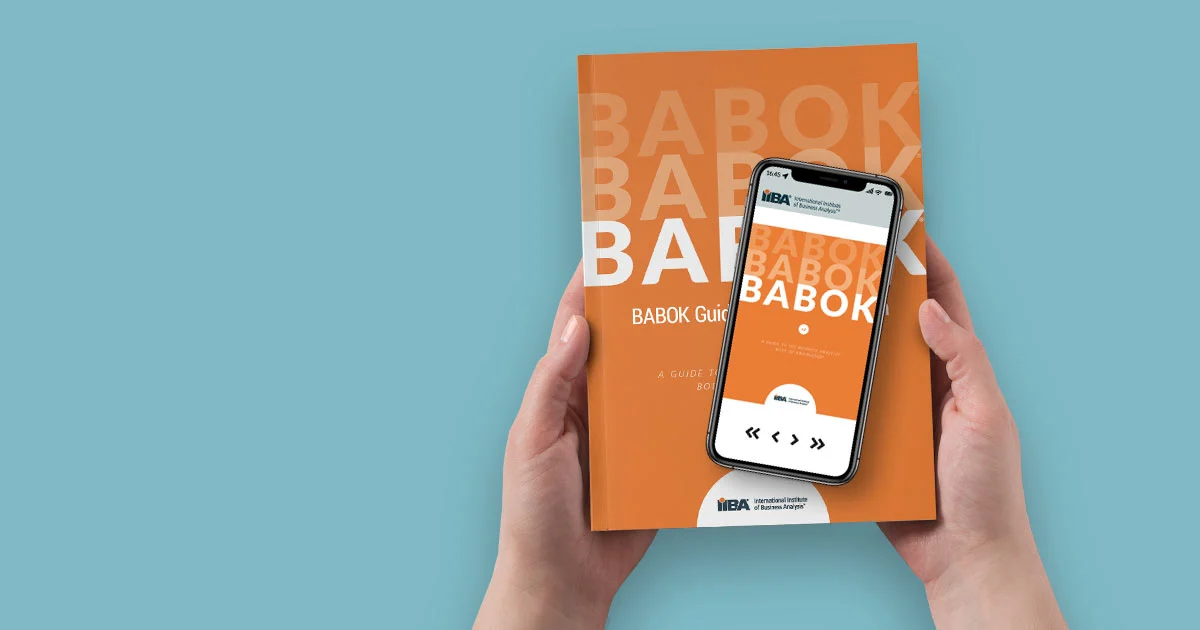
The BABOK Guide is a massive, heavy book. It is incredibly dry. My biggest mistake was trying to memorize every single page word for word.
The exam does not test your memory. It tests your application. You have to understand how the tools actually work together. Instead of memorizing definitions, focus heavily on the inputs, tasks, techniques, and outputs. You need to understand why a business analyst would choose a specific technique to solve a specific problem in a highly stressful situation.
Master the Case Study Questions
The case study questions will drain your energy. You will get a page and a half of background reading about a fake company. Then you have to answer several questions based on that single story.
My strategy was simple. I always read the actual questions first before reading the massive story. Once I knew what the test was looking for, I could skim the fake company background and hunt for the specific data points I needed. This saved me at least thirty minutes on exam day.
Do Not Fight the IIBA Logic

You have years of real world experience. This can actually hurt you on the exam.
In the real world, you might skip formal documentation to save time. You might let a project manager handle a specific task. Do not do that on the test. You must answer every single question according to the perfect, formal world of the BABOK Guide. Leave your corporate shortcuts at the door.
The Massive Career Growth and ROI
Putting yourself through this intense application and testing process requires a massive sacrifice. You will give up your weekends. You will study late at night. But the return on investment is absolutely incredible.
The day I updated my LinkedIn profile with the CBAP title, everything changed. Recruiters started messaging me constantly. I stopped getting offered junior roles and started getting pitched for Lead Business Analyst and Product Manager positions.
Industry data consistently shows that CBAP certified professionals earn significantly more money than their uncertified peers. It gives you instant international credibility. You gain the leverage to negotiate a massive salary bump at your current company or jump ship to a better role. It completely future proofs your career.
How to Actually Prepare Without Losing Your Mind

If you are an aspiring business analyst, I want you to keep this certification in the back of your mind. Track your project hours on a spreadsheet starting today. It will make your application process much easier in five years.
If you are a senior analyst reading this and you are finally ready to take the exam, do not try to study alone.
Trying to decipher the BABOK Guide by yourself in a dark room is a terrible idea. You will get overwhelmed and quit. You need structured guidance from people who have actually passed the test.
I highly recommend enrolling in a formal CBAP training. A professional bootcamp gives you the exact 35 professional development hours you need to apply. More importantly, it gives you a dedicated instructor. They break down the complex chapters into plain English. They provide incredibly realistic mock exams so you can practice your time management before the real test day.
Stop procrastinating. Build your study plan. Learn the formal frameworks. Put in the hard work, pass the exam, and claim your spot as a top tier business analyst.