
Spribe’s Aviator has reached 380 million total players as of February 2026. That’s a staggering number for a game that most American players still haven’t tried.
If you’re someone who knows your way around a slot machine or has sat through a few hands of blackjack, Betway Aviator probably hasn’t crossed your radar yet.
But globally, it’s become one of the most-played online casino games in existence, and crash games as a category now account for 35% of all mobile casino sessions worldwide.
So what’s going on here? And why does this game feel so different from everything else in a typical casino lobby?
Let’s break it down honestly, without the strategy hype or the “how to win” promises you’ll find everywhere else.
A Plane, a Multiplier and One Big Decision
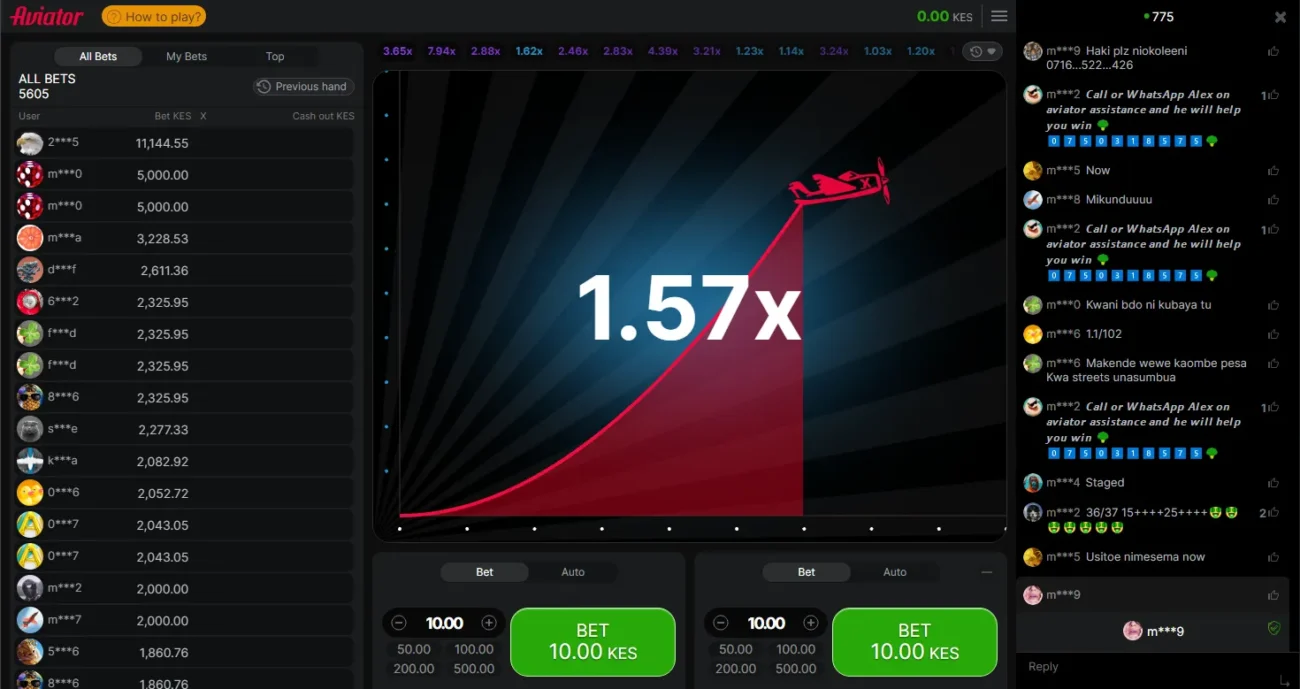
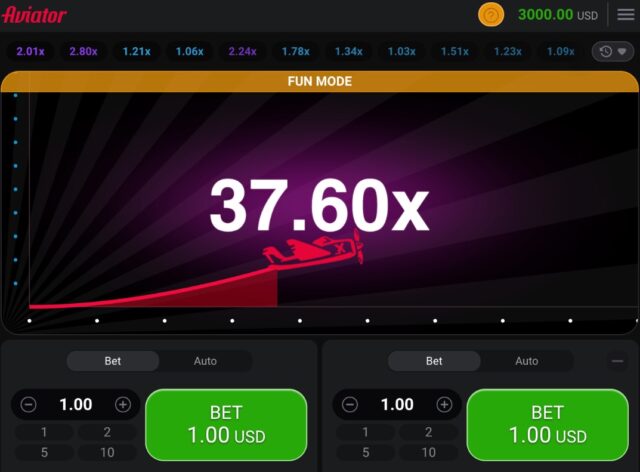
Here’s how Aviator works. A round starts, and a small plane takes off. As it climbs, a multiplier rises from 1x upward. Your job is to cash out before the plane flies away and the multiplier crashes to zero. That’s the entire game.
There are no paylines. No bonus rounds. No dealer. No cards, dice, or wheels. According to Spribe’s game specs, you can bet as little as $0.10 per round, place two bets at the same time, and set an auto-cashout point if you’d rather not white-knuckle every decision manually.
Most casino games add layers of complexity to keep you engaged. Slots pile on bonus features, free spins, and cascading reels. Blackjack has splitting, doubling down, insurance bets. Aviator goes in the opposite direction. It strips everything back until only one question remains: when do you stop?
That’s a genuinely unusual approach in an industry that tends to stack features on top of features. And for a lot of players, that single-decision format hits differently. It’s fast, it’s clear, and there’s nowhere to hide from the choice you’re making.
How Does the House Edge Stack Up?
Now that you know how the game works, the next fair question is: what does it cost to play?
Aviator’s return to player (RTP) is 97%, which translates to a 3% house edge. Every casino game has a house edge; it’s the mathematical margin built into the game that ensures the operator makes money over time. Here’s how Aviator compares to games you probably already know:
- Blackjack with basic strategy sits around 0.5%, making it the best mathematical bet on the casino floor
- Baccarat (banker bet) comes in at roughly 1.01%, according to Casino.org
- Aviator at 3% lands right in the middle of the pack
- American Roulette costs you 5.26% per bet, per Vegas Insider
- Online Slots vary widely, anywhere from 2% to 15% depending on the game
So Aviator isn’t the best mathematical deal in the casino. Blackjack and baccarat both offer better odds. But it comfortably beats most slots and roulette, which is where the majority of casual players spend their time.
One thing worth knowing: some operators can configure Aviator’s RTP between 94% and 96% rather than the default 97%. Before you play on any platform, including Aviator, check the in-game info icon to confirm the RTP you’re actually getting. It takes two seconds, and it’s the kind of due diligence that most slot players never think to do.
There’s something refreshing about a game that doesn’t bury its maths behind flashy animations. You can find the numbers, check them, and make a decision based on reality. Which brings us to the part that really sets Aviator apart.
Two Words That Mean Something Here
Traditional casino games rely on Random Number Generators (RNGs) certified by third-party auditors. You trust the certification. You trust the regulator. But you can’t personally verify whether any individual spin or hand was fair.
Aviator works differently. Spribe uses a provably fair system built on SHA-512 cryptographic hashes. In plain terms, here’s what happens: before each round, a crash point is generated using a server seed combined with the seeds of the first three players who place bets. Spribe publishes the hash of the next 10 million outcomes in advance. After every round, the server seed is revealed, and anyone can independently verify that the result wasn’t tampered with.
Will most players actually sit down and check the hash? Probably not. But the fact that you could is the point. It’s a different trust model. Instead of relying entirely on a third-party auditor’s stamp of approval, you’re given the tools to verify it yourself.
This doesn’t mean the game is ‘fair’ in the sense that you’ll always win. The 3% house edge still applies. You can and will lose rounds. What provably fair means is that the outcomes are mathematically verifiable and haven’t been manipulated after the fact. That’s an important distinction, and it’s one worth understanding clearly.
If every casino game offered this level of verifiability, would players feel differently about the industry as a whole? Probably.

The Simplest Game You Haven’t Tried Yet
Aviator’s appeal comes down to three things working together. A mechanic so simple it takes ten seconds to understand. A house edge that’s competitive and published openly. And a transparency system that lets you verify every single outcome yourself.
It’s not trying to be blackjack. It’s not trying to replace your favourite slot. It’s doing something different, and 17.4 billion bets per month suggest it’s resonating with a very large audience. As the US online gambling market continues to grow, American players will encounter this format more often. Understanding what it is and how it works puts you in a better position than most.
When a game this straightforward offers more transparency than most of the casino floor, maybe the real question isn’t why Aviator is different. It’s why more games aren’t built this way.